

A quiet space for your nervous system to settle, soften, and restore itself.
When life feels overwhelming — especially when you’re caring for others while running on empty — your body can forget what safety and ease feel like.
My practice offers a peaceful, grounded environment where your system can unwind tension, release stress, and gently return to its natural balance.
Is your system carrying more than it can comfortably hold?
Many people come to craniosacral therapy when they feel:
overwhelmed or overstimulated
depleted from caring for others
anxious, tense, or emotionally overloaded
stuck in patterns of stress they can’t “think their way out of”
disconnected from their body or sense of ease
burnt out from life’s constant demands
If any of this feels familiar, you’re not alone — and your body doesn’t have to manage it all by itself.
Craniosacral therapy offers a gentle space to slow down, settle, and return to yourself.
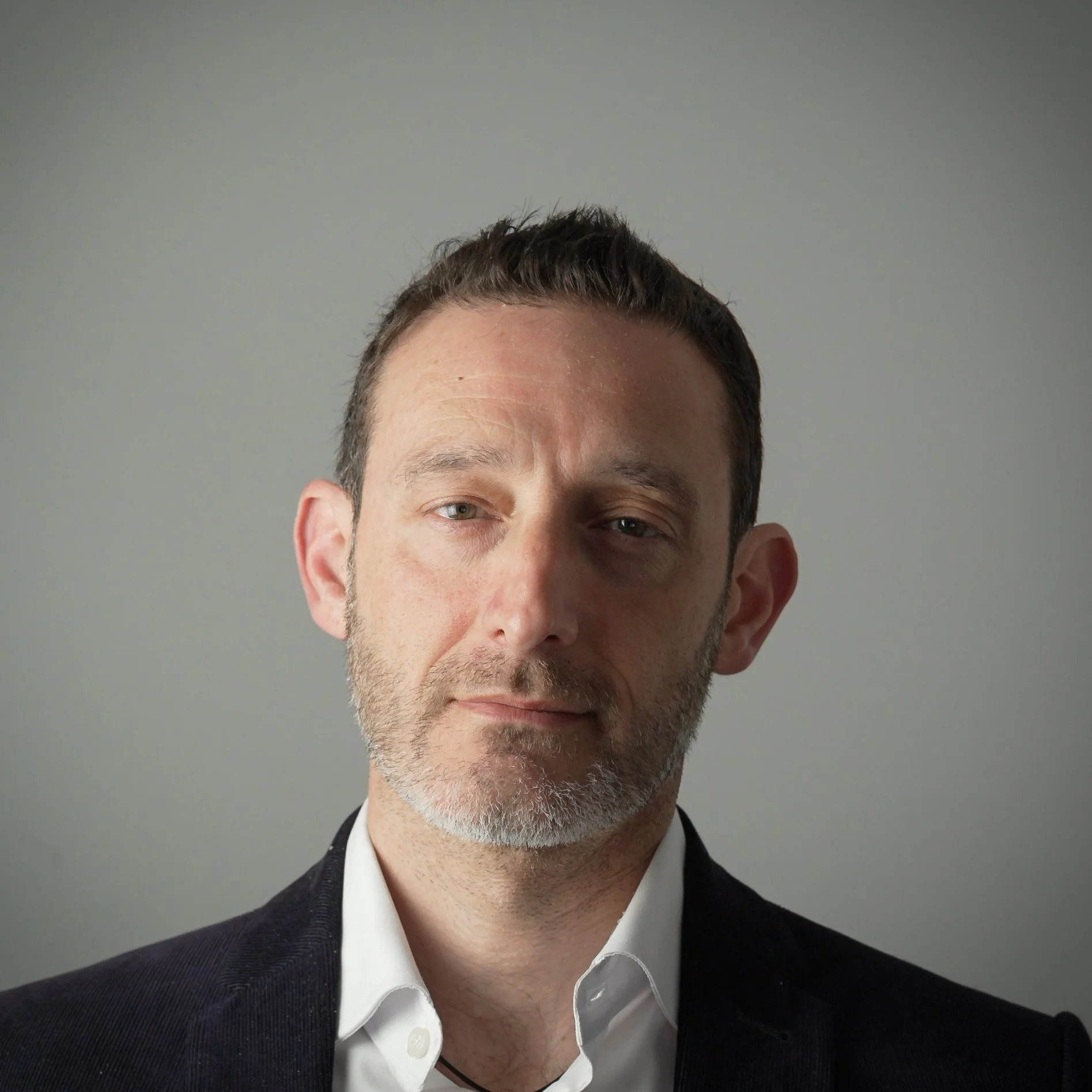
My name is Alex Paolillo, and I help people reconnect with their own inner quiet.
Through my training in biodynamic craniosacral therapy — and my lived experience supporting a child with special needs — I understand how overwhelm can live not just in the mind, but in the body.
My approach is slow, grounded, and deeply respectful of your system’s pace.
There is no pushing and no expectation — just spaciousness, safety, and gentle support.

Many clients experience:
a calmer, steadier nervous system
reduced stress and muscle tension
improved sleep and deeper rest
emotional softening and clarity
feeling more grounded and present
more capacity to cope with daily life
a sense of being held, supported, and safe
relief from tension-related discomfort

What happens in a session
Your session begins with a short conversation so I can understand how you’re feeling and what your system is carrying. You’re welcome to share as much or as little as you like — many clients simply arrive, sit down, and take a breath.
You remain fully clothed and lie comfortably on the treatment table, supported by pillows and blankets if needed. I place my hands very gently on areas such as the feet, sacrum, spine, or head — wherever your system seems to need attention.
From there, we work with stillness.
I listen through my hands to the subtle rhythms of your body — its tensions, its holding patterns, and its natural movements toward balance. Nothing is forced. Your system sets the pace, and I follow.
Most clients begin to feel:
their breath slowing
their body softening
a sense of warmth, heaviness, or gentle unwinding
a deep quiet they haven’t felt in a long time
Some enter a meditative state, some fall asleep, and some simply rest.
We end with a few minutes to come back into the room, and you’re welcome to share anything you’d like to reflect on.
My Credentials
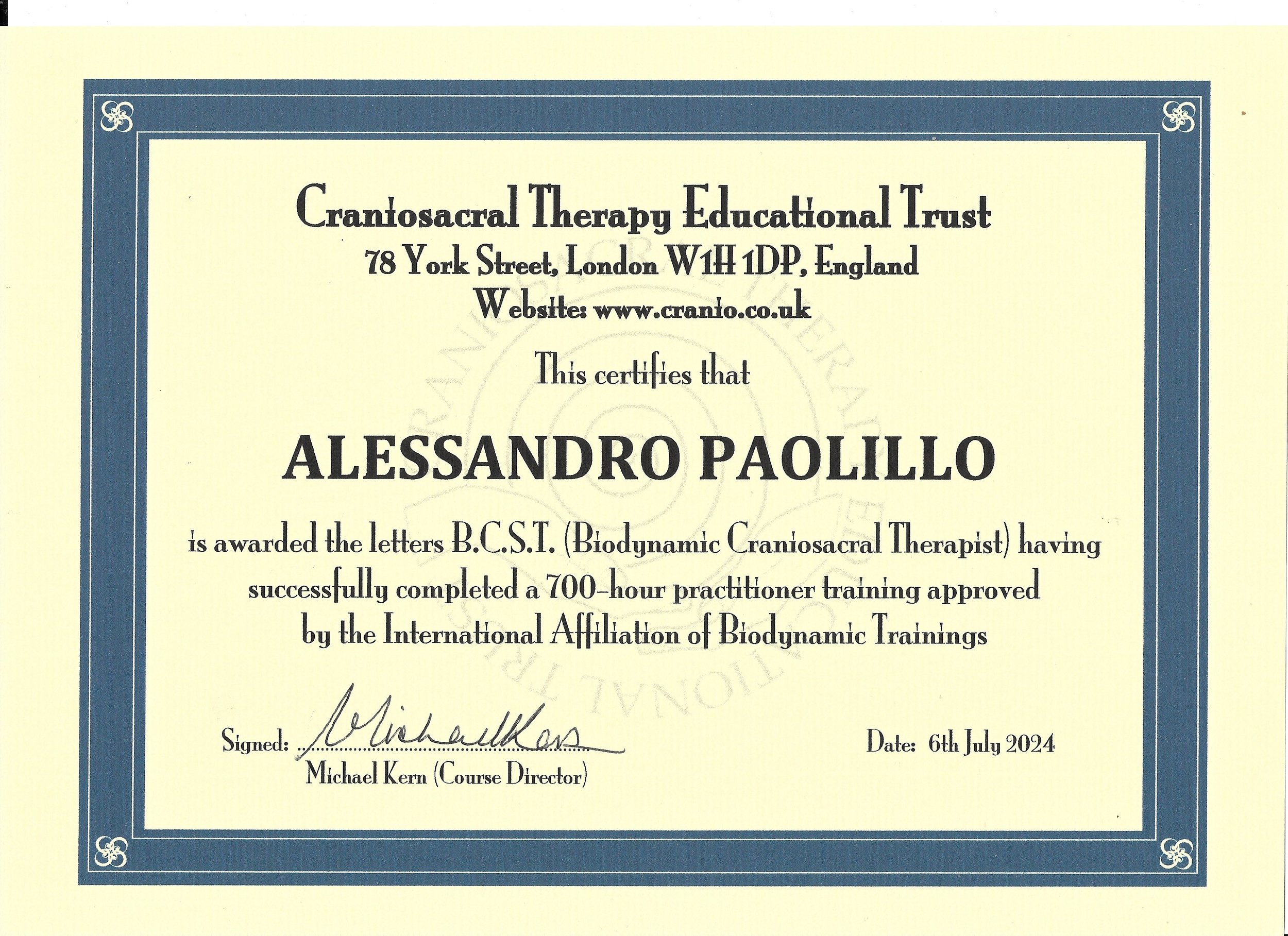

Diploma in Biodynamic Craniosacral Therapy (BCST)
This is my core professional training in craniosacral therapy. I completed a 700-hour practitioner training with the Craniosacral Therapy Educational Trust (CTET) in London, one of the leading schools internationally for biodynamic craniosacral education.
The training took place over two years, through eleven intensive seminars of four to five days each, alongside extensive home study, reading, anatomical drawing and supervised clinical practice.
A central emphasis of the training is the development of palpatory sensitivity, perceptual awareness and therapeutic presence, alongside a solid grounding in anatomy, physiology and biodynamic principles.
During the later stages of the programme, students gain clinical experience working with members of the public at the Trust’s teaching clinic in London under close tutor supervision.
The diploma is approved by the International Affiliation of Biodynamic Trainings and represents a comprehensive preparation for professional practice in biodynamic craniosacral therapy.

Diploma in Living Anatomy and Physiology
Before qualifying as a Biodynamic Craniosacral Therapist, I completed a Living Anatomy and Physiology Diploma with the Craniosacral Therapy Educational Trust.
This programme included 250 hours of study, combining detailed theoretical learning with experiential exploration of the living body. The training covered the structure and function of the major systems of the human body, including the nervous system, musculoskeletal system, cardiovascular system, and organs.
Particular emphasis was placed on understanding anatomy not only intellectually, but also through direct observation and palpation of living tissues — an approach that forms an important foundation for craniosacral practice.

CPD Course: Working with Babies, Mothers and Pregnancy
This advanced workshop explored biodynamic craniosacral approaches to working with mothers, babies and pregnancy.
The course focused on understanding the physiological and emotional processes surrounding conception, pregnancy, birth and early infancy, and how craniosacral therapy can support both mother and child during these important stages.
Topics included:
• supporting the mother’s nervous system during pregnancy
• the birth process and its effects on both mother and baby
• early developmental patterns in infants
• recognising and working with birth-related strain or stress patterns
• creating a safe therapeutic environment for mothers and newborns
The seminar was taught by Ian Wright BSc (OST), DPO, FSCCO and Mary Bolingbroke BSc (OST), experienced osteopaths and internationally recognised teachers in cranial and paediatric osteopathy.

CPD Course: The Flowering of Potential – Working with Neurodiversity
This advanced continuing professional development seminar explored working with neurodiversity in children, adolescents and adults from a biodynamic craniosacral perspective.
The course focused on understanding neurodevelopment and the biodynamic forces that shape the developing nervous system, as well as practical approaches to supporting neurodiverse clients with sensitivity and clarity.
Topics included:
• biodynamic neurodevelopment
• factors influencing development from conception through early life
• trauma and its effects on the developing nervous system
• autism, dyspraxia, sensory processing and other neurodevelopmental patterns
• working therapeutically with children, adolescents and adults
The seminar was taught by Ian Wright BSc (OST), DPO, FSCCO, an internationally respected osteopath and cranial practitioner who has taught cranial and paediatric osteopathy for over 25 years.
Book a Session
If you feel your system asking for rest, you’re welcome to book a session or get in touch with any questions.
There’s nothing you need to prepare — simply come as you are.
To book:
You can message me directly on WhatsApp, or call if you prefer to speak.
📞 Phone: 07525 469 608
📧 Email: alpao74@yahoo.co.uk
Location:
Clapham Common, London
Session fee:
£70 for a 60-minute session
If you're unsure whether craniosacral therapy is right for you, I’m happy to answer any questions or guide you gently through what to expect.